E-Liquid Manufacturer
E-Liquid Manufacturer for Structured Product Development and Production
E-liquid manufacturing is a process that requires coordinated management of formulation requirements, raw materials, production procedures, filling, packaging, quality control, documentation, and applicable market requirements.
For companies developing an e-liquid product line, manufacturing is not limited to filling a finished liquid into a container. A controlled production process needs to connect the product specification with raw-material management, production procedures, packaging requirements, quality checks, and finished-product documentation.
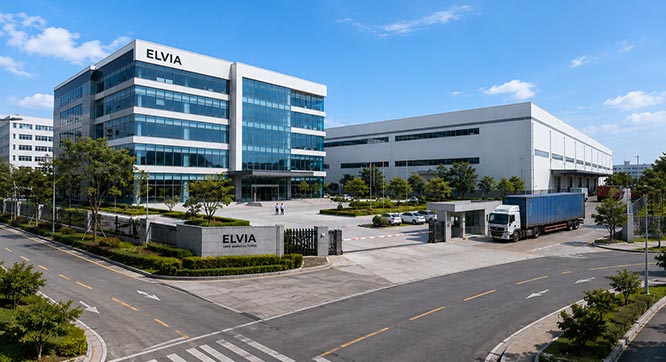
ELVIA's e-liquid manufacturing resources are structured around these production stages, providing a clear framework for companies evaluating e-liquid production capabilities and manufacturing requirements.
This page focuses specifically on e-liquid manufacturing, including product development, production workflow, quality management, packaging coordination, and manufacturing documentation. It is part of ELVIA's broader Vape Manufacturing structure and is separate from the general Vape Manufacturer and OEM Vape Manufacturing pages.
What Is E-Liquid Manufacturing?
E-liquid manufacturing is the controlled process of producing a specified liquid formulation and preparing the finished product for packaging and distribution according to defined production and quality requirements.
Depending on the project, e-liquid production can involve:
Product specification
Formula and ingredient documentation
Raw-material management
Batch preparation
Mixing and production procedures
Filling
Container preparation
Labeling
Packaging
Batch identification
Quality inspection
Production records
Finished-product checks
Supply planning
The exact process depends on the product specification, manufacturing requirements, packaging format, target market, and applicable regulations.
A professional manufacturing process therefore needs to establish clear requirements before production begins.
ELVIA's E-Liquid Manufacturing Approach
ELVIA organizes e-liquid production around a structured manufacturing workflow:
Product Requirements → Specification → Raw Materials → Production → Filling → Inspection → Packaging → Documentation
Each stage has a defined role.
Product requirements establish what needs to be produced. The specification provides the production reference. Raw-material management connects the approved requirements with the materials used during production.
Production and filling then convert the defined requirements into finished units, while inspection and documentation provide information for quality management and production traceability.
This approach creates a clearer connection between the original product specification and the finished packaged product.
Product Specification Before Production
A clear product specification is the foundation of controlled e-liquid manufacturing.
Depending on the project, relevant information may include:
Product format
Container size
Packaging format
Ingredient documentation
Formula requirements
Batch requirements
Label information
Storage requirements
Production quantity
Market-specific requirements
For an established product, the manufacturing process may begin with an existing specification and approved documentation.
For a new product, additional development work may be required before production can be prepared.
The purpose of the specification stage is to ensure that production requirements are defined before materials and manufacturing processes are finalized.
Raw-Material Management
Raw materials are an important part of e-liquid manufacturing because finished-product consistency depends on controlled inputs.
A structured manufacturing process should connect raw materials with the relevant product specification and production documentation.
Depending on the product, material-management procedures may include:
Material identification
Supplier documentation
Incoming inspection
Batch or lot identification
Storage requirements
Production allocation
Documentation management
The exact requirements depend on the product formulation and applicable manufacturing standards.
Maintaining clear material records also helps establish traceability between production inputs and finished batches.
E-Liquid Production Process
Once product requirements and production materials are confirmed, the manufacturing process can move into production.
Production Preparation
Before production begins, the required materials, equipment, documentation, containers, and packaging components are prepared according to the applicable production plan.
This stage helps ensure that production is carried out against an established specification.
Batch Preparation
Production is organized around defined batch requirements.
The relevant materials and quantities are managed according to the approved manufacturing documentation.
The purpose of controlled batch preparation is to maintain consistency between production runs and provide a clear production reference.
Mixing and Processing
The applicable ingredients are processed according to the defined manufacturing procedure.
Production parameters should be controlled according to the product specification and applicable manufacturing requirements.
The specific process depends on the formulation and production system.
Filling
After production preparation, the finished liquid is transferred into the specified containers through the applicable filling process.
Filling requirements may include:
Container format
Fill quantity
Filling consistency
Container compatibility
Closure
Batch identification
The actual filling process depends on the product and packaging format.
Packaging
After filling and inspection, finished units can proceed through the applicable packaging process.
Packaging requirements may include containers, labels, secondary packaging, batch information, and other documentation required for the intended market.
Quality Control in E-Liquid Manufacturing
Quality management is an important part of e-liquid production.
A controlled quality process can include several checkpoints rather than relying only on inspection after packaging.
Depending on the product, these may include:
Incoming Material Inspection
Relevant raw materials and packaging components are checked against applicable specifications and documentation.
Production Control
Manufacturing activities are carried out according to defined procedures and production documentation.
Filling Inspection
Filling operations can be checked against the specified container and quantity requirements.
Packaging Inspection
Labels, containers, packaging components, and batch information can be reviewed against the applicable specification.
Finished-Product Inspection
Finished products can be inspected according to the defined quality requirements before release.
The exact inspection and testing program depends on the product, formulation, market, and applicable requirements.
Batch Traceability and Production Documentation
Manufacturing documentation provides an important connection between raw materials, production activities, and finished products.
A structured documentation system can record information such as:
Product specification
Production date
Batch identification
Raw-material information
Production records
Filling records
Packaging information
Quality-control results
Finished-product status
Batch-level documentation can make it easier to identify the production history associated with a particular finished product.
For companies managing multiple product formats or repeated production runs, consistent documentation also helps maintain continuity between manufacturing batches.
E-Liquid Packaging and Filling Formats
Packaging is part of the manufacturing process because the container and final presentation need to correspond with the product specification.
Depending on the project, e-liquid manufacturing may involve different container and packaging formats.
Relevant considerations can include:
Container material
Container capacity
Closure system
Filling requirements
Label dimensions
Batch information
Outer packaging
Transport requirements
The selected format should be established during the product-development and production-planning stages.
Packaging requirements should also be evaluated against the rules applicable to the intended market rather than assumed to be universal.
E-Liquid Manufacturing for Different Project Stages
Different customers may enter the manufacturing process at different stages.
New Product Development
A new project may begin with an initial concept and require specification development before production.
The development pathway can include:
Concept → Specification → Material Review → Production Preparation → Sample/Trial → Evaluation → Final Production
The exact sequence depends on the product and project requirements.
Existing Product Manufacturing
An established product may already have a defined formula, container, packaging specification, and production documentation.
In this situation, manufacturing can focus on controlled production, quality management, documentation, and supply planning.
Brand-Specific Production
Some projects may involve customer-specific product specifications and packaging requirements.
Where customization or private-label manufacturing is required, those requirements should be managed through the appropriate OEM manufacturing process rather than duplicating the complete OEM structure on this page.
This keeps the E-Liquid Manufacturer page focused on manufacturing capability and production management.
Manufacturing Quality Depends on the Complete Process
Finished-product quality does not come from a single production step.
It depends on the relationship between:
Materials → Specification → Production → Filling → Packaging → Inspection → Documentation
If one part of the process is not properly controlled, it can affect the consistency of the finished product.
For this reason, manufacturing quality should be considered as a complete system.
Raw materials need appropriate identification and documentation. Production needs defined procedures. Filling needs controlled requirements. Packaging needs to correspond with the product specification. Finished products need appropriate inspection and records.
This process-oriented approach provides a more useful basis for evaluating manufacturing capability than production capacity alone.
E-Liquid Manufacturing and Regulatory Requirements
E-liquid products can be subject to different regulatory and labeling requirements depending on the intended market.
Requirements may differ by country or region and can change over time.
For this reason, manufacturers and brands should establish the applicable market requirements before finalizing product specifications, packaging, labeling, and production arrangements.
Manufacturing documentation should support the requirements that have been established for the specific project.
Rather than assuming that one specification is suitable for every market, a market-specific review should be incorporated into product planning where required.
Manufacturing Evidence and EEAT
A manufacturing page should provide evidence of real production capabilities rather than relying only on promotional descriptions.
Useful evidence can include:
Manufacturing facility information
Production equipment
Quality-control procedures
Product-development resources
Raw-material management procedures
Production documentation
Batch-management systems
Packaging processes
Certifications and applicable documentation
Manufacturing photographs
Company information
Relevant production experience
These elements help prospective customers understand the organization behind the manufacturing process.
For ELVIA, the E-Liquid Manufacturer page can therefore work together with the company profile, manufacturing hub, product pages, quality information, and documentation resources to create a more complete picture of the business.
The objective is to make manufacturing information easier to verify and understand rather than relying on broad claims such as "professional," "premium," or "leading."
Why Choose an E-Liquid Manufacturing Partner Based on Process
When evaluating an e-liquid manufacturing company, production capacity is only one consideration.
A more complete evaluation can include:
Product-development capability
Raw-material management
Production procedures
Filling capability
Quality-control process
Batch documentation
Packaging coordination
Manufacturing records
Applicable certifications
Market-specific documentation
Communication and project management
These factors provide a more complete view of manufacturing capability.
A company that clearly documents its production process also gives prospective customers more information with which to evaluate whether its manufacturing system is appropriate for a particular project.
ELVIA's Position Within the Manufacturing Structure
The E-Liquid Manufacturer page is part of ELVIA's broader Vape Manufacturing content structure.
The main Vape Manufacturing hub explains the overall manufacturing ecosystem.
The Vape Manufacturer page introduces ELVIA as the manufacturing company and provides broader information about its production capabilities.
The E-Liquid Manufacturer page focuses specifically on e-liquid production, raw-material management, filling, packaging, quality control, and documentation.
The OEM Vape Manufacturing page addresses customer-specific customization and private-label production.
This separation gives each page a clear role and reduces unnecessary repetition across the website.
Frequently Asked Questions About E-Liquid Manufacturing
What is an e-liquid manufacturer?
An e-liquid manufacturer is a company involved in producing liquid products according to defined formulation, production, packaging, and quality requirements.
What does e-liquid manufacturing include?
E-liquid manufacturing can include product specification, raw-material management, batch preparation, production, filling, packaging, inspection, documentation, and supply planning.
How does the e-liquid manufacturing process work?
A typical process begins with product requirements and specifications, followed by material preparation, production, filling, quality inspection, packaging, and documentation. The exact workflow depends on the product.
What information is needed to start an e-liquid manufacturing project?
Useful information may include the product specification, formula documentation, container format, packaging requirements, production quantity, intended market, and any existing product samples or documentation.
How is batch traceability managed?
Batch traceability can connect production records with raw materials, production dates, filling information, packaging information, and finished-product records. The exact documentation system depends on the manufacturing process.
Can an existing e-liquid product be manufactured?
An existing product may provide a starting point when appropriate formulation, packaging, production, and quality documentation are available. The manufacturing process depends on the information and requirements established for the project.
Does e-liquid packaging vary by market?
Yes. Packaging and labeling requirements can vary by jurisdiction. Product and packaging specifications should therefore be reviewed against the requirements applicable to the intended market.
What quality-control steps are used?
Quality control can include incoming material checks, production controls, filling checks, packaging inspection, and finished-product inspection. The applicable controls depend on the product and manufacturing requirements.
Request E-Liquid Manufacturing Information
A controlled e-liquid manufacturing process begins with clearly defined product requirements.
ELVIA's manufacturing information provides a structured framework covering product specification, material management, production, filling, packaging, quality control, and documentation.
For companies evaluating manufacturing capabilities, the next step is to provide the relevant product specification and technical information so that the applicable manufacturing requirements can be reviewed.
Review E-Liquid Production Requirements →
Categories
Latset News
CONTACT US
Contact: Lisa Shen
Phone: 18122097580
E-mail: sales@elviavape.com
Add: No.18, Fumin Industrial Zone, Shenzhen, China
 Send Email
 WhatsApp