Vape Manufacturing
Vape Manufacturing From Product Concept to Production
Vape manufacturing is a complete process that connects product development, engineering, component selection, production, quality control, packaging, and supply planning. For brands developing a new vape product, manufacturing is not simply the final step after product design. Manufacturing requirements need to be considered from the beginning so that a product can be developed into a consistent, scalable, and production-ready solution.
ELVIA provides an integrated approach to vape manufacturing, helping customers move from an initial product concept or existing specification toward sampling, production preparation, manufacturing, quality inspection, and commercial supply. This page serves as the central manufacturing hub for ELVIA's product development and production resources. From here, customers can explore specific manufacturing services, product categories, and business solutions according to their project requirements.
What Is Vape Manufacturing?
Vape manufacturing is the process of developing and producing vapor products according to defined technical, functional, quality, packaging, and commercial requirements.
Depending on the product, the manufacturing process may involve:
Product specification and development
Industrial and structural design
Electronic and hardware engineering
Component selection and sourcing
Battery and power-system integration
Pod, cartridge, or heating-system configuration
Prototype and sample development
Manufacturing engineering
Production and assembly
Functional and appearance inspection
Quality control
Packaging and labeling coordination
Finished-product inspection
Production and supply planning
The exact process varies according to the product architecture, specifications, target market, packaging requirements, and production volume.
For this reason, a professional vape production program should connect product development with manufacturing feasibility rather than treating them as separate activities.
ELVIA's Vape Manufacturing Approach
ELVIA structures its manufacturing workflow around the complete product lifecycle.
The general process can be summarized as:
Product Requirements → Development → Sampling → Evaluation → Production Preparation → Manufacturing → Quality Control → Packaging → Supply
Each stage has a specific purpose.
Product requirements establish what needs to be manufactured. Development translates those requirements into a practical product structure. Sampling allows the proposed design to be evaluated before volume production. Production preparation establishes the requirements needed for consistent manufacturing.
Once production begins, manufacturing and quality-control procedures work together to maintain consistency between the approved specifications and commercial output.
This structured approach allows manufacturing decisions to be made with the final product in mind, rather than focusing only on individual components or production steps.
From Product Requirements to a Production-Ready Product
Product Specification
Every manufacturing project begins with a clear understanding of the product.
Depending on the project, the specification may include product format, dimensions, capacity, battery configuration, activation method, airflow structure, materials, appearance, packaging, branding requirements, and other technical or commercial details.
Customers with an existing product specification can provide drawings, samples, reference products, or technical requirements as a starting point.
For new product concepts, the initial stage can focus on defining the product's intended structure and manufacturing requirements.
Engineering and Product Development
After the product requirements are established, engineering considerations can be evaluated.
The objective is to develop a product that is not only functional but also suitable for repeatable manufacturing.
Engineering considerations may include component compatibility, structural configuration, assembly requirements, electronic integration, airflow, materials, production tolerances, and other product-specific factors.
This stage creates the connection between product design and manufacturing feasibility.
Prototype and Sample Evaluation
Sampling provides an opportunity to evaluate the physical product before commercial production.
Depending on the project, evaluation may cover dimensions, appearance, component compatibility, functionality, assembly, packaging, and other agreed requirements.
The sample stage is particularly important for private-label and new-product projects because it allows specifications to be reviewed before production volumes increase.
Once the product is confirmed, the approved specification can become the reference point for production.
Production Preparation
Before volume manufacturing begins, production requirements need to be organized.
This can include component requirements, product specifications, packaging information, manufacturing documentation, inspection requirements, and production arrangements.
Clear production preparation helps reduce unnecessary changes during manufacturing and creates a more controlled transition from development to commercial production.
Manufacturing and Assembly
Once production requirements are confirmed, components and materials move through the applicable manufacturing and assembly processes.
The actual production workflow depends on the product category.
A disposable device, pod system, e-liquid product, and heat-not-burn product each have different structures and therefore require different manufacturing considerations.
For this reason, ELVIA organizes its manufacturing resources by product category while maintaining a common focus on production consistency and quality management.
Vape Manufacturing Across Different Product Categories
Disposable Vape
Disposable vape products require coordination between the device structure, battery, heating system, e-liquid system, airflow, external design, and packaging.
Different product formats can require different production configurations.
Customers looking for product-specific information can continue to the dedicated Disposable Vape resources within the ELVIA product structure.
Pod System
Pod systems combine a device with a compatible pod or cartridge structure.
Depending on the product, development considerations may include device architecture, pod compatibility, battery integration, airflow, materials, filling configuration, and packaging.
The dedicated Pod System section provides a more focused entry point for customers evaluating this product category.
E-Liquid
E-liquid production involves a different manufacturing workflow from hardware products.
Relevant considerations may include formulation requirements, ingredient management, filling, containers, packaging, labeling, quality control, and market-specific requirements.
Customers interested in this category can explore ELVIA's dedicated E-Liquid resources.
Heat-Not-Burn
Heat-not-burn products use a different product architecture from conventional vapor devices.
As a result, product development and manufacturing requirements need to be evaluated according to the specific technology and product configuration.
The dedicated Heat Not Burn section provides a separate pathway for customers exploring this category.
Quality Control in Vape Production
Quality control is an important part of the manufacturing process and should not be limited to a final inspection.
Depending on the product, manufacturing quality management may involve several checkpoints throughout production.
These can include:
Incoming component inspection
Material and specification verification
Assembly inspection
Functional testing
Appearance inspection
Packaging verification
Label and specification checks
Finished-product inspection
Production record management
The purpose of these checkpoints is to identify potential manufacturing issues at the appropriate stage and maintain consistency between approved samples and production output.
For brands, this consistency matters because the finished product represents the brand after it enters the market.
A manufacturing partner therefore needs to manage not only production volume but also the processes that support repeatable product quality.
Vape Product Development and Manufacturing
For a new vape brand, product development and manufacturing are closely connected.
A product concept may look straightforward at the beginning, but production requirements can affect the final structure, components, packaging, cost, and manufacturing workflow.
An effective development process therefore considers manufacturing feasibility early.
A typical development path can be represented as:
Concept → Specification → Engineering → Sample → Evaluation → Final Specification → Production
This gives brands a structured framework for moving from an initial idea to a production-ready product.
For customers who already have a mature specification, the process can begin at a later stage.
For customers developing a new product, more attention may be required during specification, engineering, and sampling.
Manufacturing Solutions for Different Business Needs
Different customers use vape manufacturing services for different reasons.
New Product Development
New brands may begin with an idea, product reference, or initial concept.
Their manufacturing requirements may include product definition, engineering coordination, sampling, packaging development, and production planning.
Established Product Production
Established brands may already have specifications, samples, technical drawings, and packaging requirements.
In this situation, the manufacturing focus may shift toward production consistency, quality control, supply planning, and commercial-scale output.
Private-Label Development
Private-label projects generally require coordination between a manufacturing platform and brand-specific requirements.
These may include product configuration, appearance, packaging, labeling, and other agreed customization requirements.
For detailed private-label manufacturing information, customers can continue to the dedicated OEM Vape Manufacturing page rather than duplicating the full OEM process here.
Distributor and Commercial Supply
Distributors and importers may focus on product selection, specifications, packaging, production planning, documentation, and supply continuity.
The manufacturing hub provides the starting point for understanding ELVIA's production structure before moving to a specific product or business solution.
Why Manufacturing Transparency Matters
Choosing a manufacturing partner involves more than comparing product catalogs.
A brand may also need to understand how products are developed, how specifications are managed, how production is controlled, and how quality is checked.
Manufacturing information is therefore more useful when it is supported by evidence.
Relevant evidence may include:
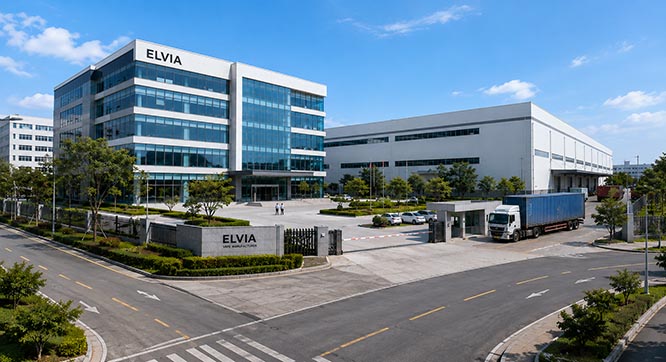
Manufacturing facility information
Production equipment
Product-development processes
Quality-control procedures
Product specifications
Certifications and quality documentation
Sample-development workflows
Real manufacturing case studies
Company and team information
ELVIA's website is structured to connect these different information sources so that customers can evaluate the company, products, manufacturing capabilities, and development process from multiple perspectives.
This creates a more transparent information environment for prospective customers and supports a clearer understanding of ELVIA's manufacturing capabilities.
Explore ELVIA's Manufacturing Resources
The Vape Manufacturing page is the central entry point to ELVIA's manufacturing ecosystem.
From this hub, visitors can move to the resource that matches their specific requirements:
Vape Manufacturer
Learn more about ELVIA as a manufacturing company and its broader production capabilities.
OEM Vape Manufacturing
Explore private-label, customized product development, and OEM production solutions.
Disposable Vape
Review disposable vape products and related manufacturing information.
Pod System
Explore pod-system products and development considerations.
E-Liquid
Review e-liquid product formats and production-related information.
Heat Not Burn
Explore heat-not-burn products and related manufacturing resources.
This hub-and-spoke structure allows each page to focus on a distinct search intent while maintaining logical connections between related manufacturing resources.
Frequently Asked Questions About Vape Manufacturing
What is included in vape manufacturing?
Vape manufacturing can include product development, engineering, component sourcing, prototyping, sampling, production preparation, manufacturing, assembly, quality control, packaging, and supply coordination. The exact scope depends on the product and project requirements.
How does the vape manufacturing process work?
A typical process starts with product requirements, followed by development and sampling, production preparation, manufacturing, quality inspection, packaging, and supply. The workflow can vary according to product type and specifications.
Can ELVIA develop a product from an initial concept?
A manufacturing project can begin with an initial product concept, reference product, sample, drawing, or defined specification. The appropriate development process depends on the customer's requirements and the product configuration.
Can an existing product specification be used?
Yes. Existing technical drawings, approved samples, product specifications, packaging requirements, or reference products can provide a starting point for manufacturing evaluation and production planning.
What product categories are covered?
ELVIA's manufacturing resources cover major categories including disposable vape products, pod systems, e-liquid products, and heat-not-burn products. Each category has different technical and production requirements.
How is manufacturing quality controlled?
Quality management can include incoming component inspection, assembly checks, functional testing, appearance inspection, packaging verification, and finished-product inspection. Specific checkpoints depend on the product and agreed requirements.
What information should I provide for a manufacturing inquiry?
Useful information includes the product category, desired specifications, estimated quantity, packaging requirements, target market, branding requirements, existing samples, technical drawings, or reference products. The more clearly the requirements are defined, the easier it is to evaluate the appropriate manufacturing route.
Start Your Vape Manufacturing Project With ELVIA
A successful product requires more than a production line. It requires a clear connection between product requirements, engineering, manufacturing, quality control, and commercial supply.
ELVIA's Vape Manufacturing hub provides a structured starting point for brands, distributors, and businesses exploring product development and production.
Whether you have an initial concept, an existing product specification, or a private-label project ready for production planning, share your requirements with the ELVIA team.
Tell us about your product, specifications, target market, quantity, packaging, or existing sample.
Request Vape Manufacturing Support →
Categories
Latset News
CONTACT US
Contact: Lisa Shen
Phone: 18122097580
E-mail: sales@elviavape.com
Add: No.18, Fumin Industrial Zone, Shenzhen, China
 Send Email
 WhatsApp